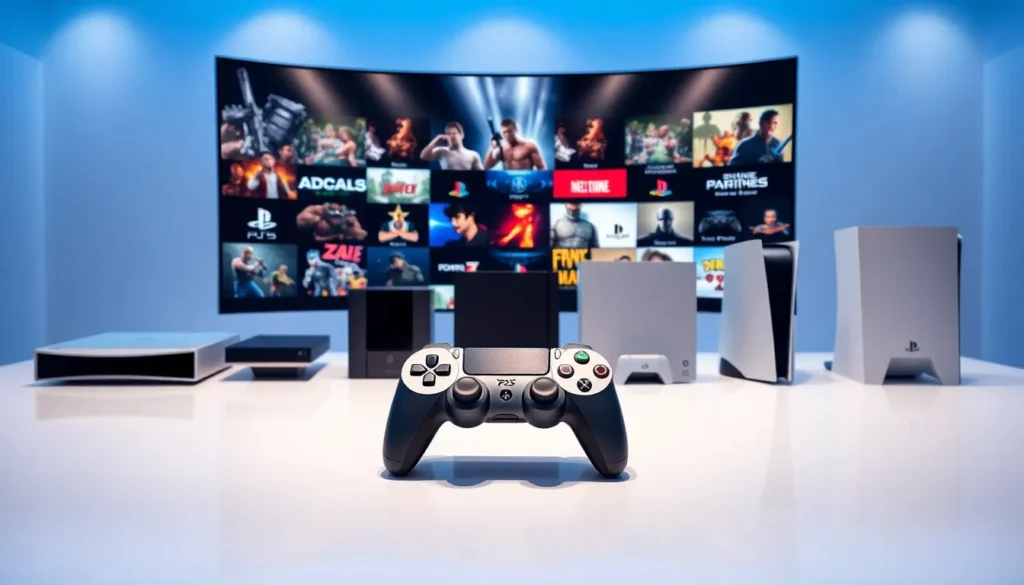

PlayStation examples span decades of gaming history, from groundbreaking consoles to legendary exclusive titles. Sony launched the original PlayStation in 1994, and the brand has since become synonymous with innovation in the gaming industry. This article covers the most notable PlayStation examples across consoles, games, accessories, and cultural impact. Whether someone is a longtime fan or new to gaming, these examples highlight why PlayStation remains a dominant force in entertainment.
Table of Contents
ToggleKey Takeaways
- PlayStation examples span five console generations, from the original PS1 in 1994 to the PS5 in 2020, each pushing gaming technology forward.
- The PS2 remains the best-selling console of all time with over 155 million units sold, showcasing PlayStation’s market dominance.
- Exclusive titles like God of War, The Last of Us, and Horizon Zero Dawn represent standout PlayStation examples that drive console sales and define gaming storytelling.
- Sony’s accessories, including DualShock controllers and PlayStation VR, demonstrate innovation beyond consoles and enhance the overall gaming experience.
- PlayStation shaped modern gaming by popularizing 3D graphics, establishing digital storefronts, and raising narrative standards across the industry.
The Evolution of PlayStation Consoles
Sony’s PlayStation consoles have defined each generation of gaming hardware. Here are the key PlayStation examples that shaped the industry.
PlayStation (PS1) – 1994
The original PlayStation introduced CD-based gaming to the mainstream market. It sold over 102 million units worldwide. This console gave players access to 3D graphics at an affordable price point. Games like Final Fantasy VII and Metal Gear Solid became cultural phenomena on this platform.
PlayStation 2 (PS2) – 2000
The PS2 remains the best-selling console of all time with over 155 million units sold. Sony included a built-in DVD player, which made the PS2 an entertainment hub for many households. The library featured thousands of titles, including Grand Theft Auto: San Andreas and Kingdom Hearts.
PlayStation 3 (PS3) – 2006
Sony launched the PS3 with Blu-ray support and online gaming through the PlayStation Network. The console faced stiff competition from Microsoft’s Xbox 360 but eventually found success with exclusive titles. Its Cell processor pushed graphical boundaries, though developers initially struggled with the architecture.
PlayStation 4 (PS4) – 2013
The PS4 corrected many PS3 missteps. Sony focused on developer-friendly hardware and strong first-party games. The console sold over 117 million units and hosted PlayStation examples like God of War (2018) and Marvel’s Spider-Man.
PlayStation 5 (PS5) – 2020
The PS5 brought ultra-fast SSD storage and ray tracing to console gaming. Its DualSense controller introduced haptic feedback and adaptive triggers. Even though supply chain challenges at launch, demand remained high. PlayStation examples on this console include Demon’s Souls remake and Returnal.
Legendary PlayStation Exclusive Games
PlayStation exclusives drive console sales and build brand loyalty. These games represent some of the best PlayStation examples in gaming history.
God of War Series – Kratos debuted in 2005 on PS2. The 2018 soft reboot reimagined him as a father in Norse mythology. The sequel, God of War Ragnarök (2022), won multiple Game of the Year awards.
The Last of Us – Naughty Dog released this survival action game in 2013. It told an emotional story about Joel and Ellie during a fungal pandemic. The sequel expanded the narrative with controversial but impactful storytelling.
Uncharted Series – Nathan Drake became PlayStation’s answer to Indiana Jones. Four mainline games delivered cinematic action and memorable set pieces. The franchise sold over 44 million copies.
Horizon Zero Dawn – Guerrilla Games created a post-apocalyptic world filled with robotic creatures. Aloy became one of PlayStation’s most recognizable characters. The sequel, Horizon Forbidden West, pushed PS5 hardware.
Ghost of Tsushima – Sucker Punch Productions released this samurai action game in 2020. Players praised its stunning visuals and respectful portrayal of feudal Japan. It became one of the fastest-selling original PlayStation examples.
Bloodborne – FromSoftware partnered with Sony to create this gothic action RPG. Its punishing difficulty and atmospheric design earned a devoted following. Many players still request a sequel or PC port.
Popular PlayStation Accessories and Peripherals
PlayStation accessories extend gameplay options and improve the user experience. These PlayStation examples show how Sony innovated beyond the console itself.
DualShock Controllers – Sony introduced rumble feedback with the DualShock in 1997. Each generation refined the design. The DualShock 4 added a touchpad and light bar, while the DualSense brought haptic feedback to PS5.
PlayStation VR – Sony entered virtual reality in 2016 with PSVR. The headset worked with PS4 and offered games like Astro Bot Rescue Mission and Resident Evil 7 in VR. PSVR2 launched in 2023 with improved resolution and eye tracking.
PlayStation Camera – This accessory enabled motion tracking and streaming. It supported PSVR functionality and allowed face login on PS4.
Memory Cards – PS1 and PS2 required memory cards for save data. These small storage devices became essential purchases for any PlayStation owner.
PlayStation Move – Sony released motion controllers in 2010 to compete with Nintendo’s Wii. The Move found new life as a VR controller for PSVR.
Pulse 3D Headset – Sony designed this wireless headset specifically for PS5’s Tempest 3D AudioTech. It delivers spatial sound for compatible games.
How PlayStation Shaped Modern Gaming
PlayStation examples extend beyond products. Sony’s influence changed how people play, buy, and experience games.
Popularizing 3D Gaming
The original PlayStation made 3D gaming accessible to mainstream audiences. Before PS1, 3D games required expensive PC hardware. Sony delivered this experience at a fraction of the cost.
Establishing Digital Storefronts
The PlayStation Store launched with PS3 and PS Vita. It allowed players to purchase games digitally. This model became standard across all gaming platforms. Today, digital sales often exceed physical game purchases.
Raising the Bar for Storytelling
PlayStation exclusives pushed narrative expectations in games. Titles like The Last of Us and God of War earned comparisons to film and television. Sony invested heavily in first-party studios that prioritize story-driven experiences.
Building Online Communities
PlayStation Network connected millions of players worldwide. Trophy systems encouraged completion and competition. PlayStation Plus offered monthly free games and online multiplayer access.
Influencing Hardware Design
Sony’s controller layouts influenced the entire industry. The thumbstick placement, shoulder button configuration, and ergonomic shape became templates for competitors. The DualSense controller now sets expectations for next-generation haptic technology.
These PlayStation examples demonstrate the brand’s lasting impact. Sony didn’t just make consoles, they helped define modern gaming culture.