
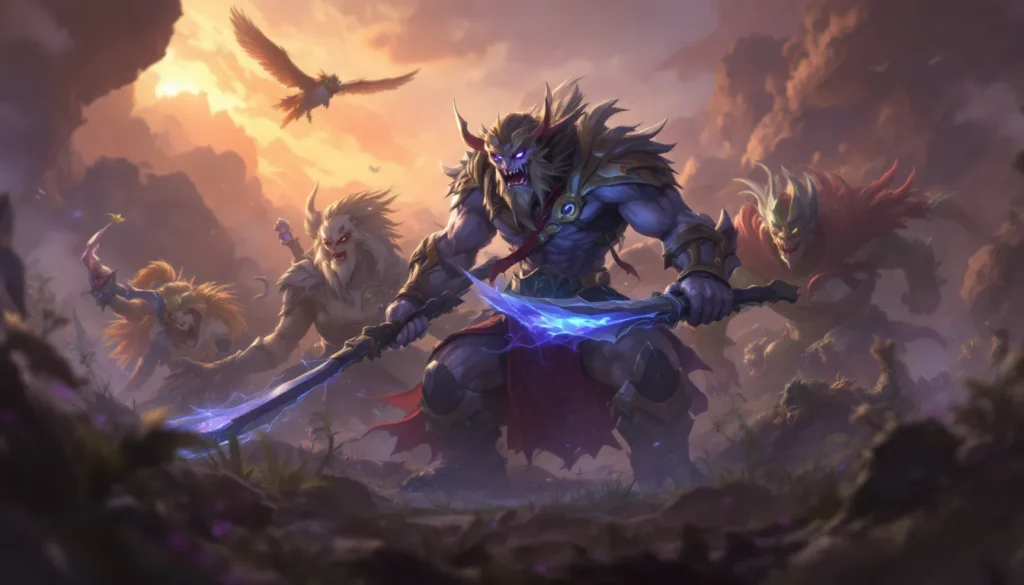

The League of Legends movie universe isn’t what you’d expect. There’s no big-budget live-action adaptation hitting theaters next year, at least not yet. Instead, Riot Games has built something arguably more interesting: a narrative universe that expands across animated series, cinematic shorts, and multiple ongoing projects that connect deeply to the game itself. Arcane, the flagship series, completely changed how gamers and general audiences view video game adaptations. It proved that a League of Legends property could tell compelling stories that stand on their own while enriching the game world millions of players already know. If you’ve been curious about what’s out there beyond the Rift, or wondering how all these projects connect, here’s everything you need to know.
Table of Contents
ToggleKey Takeaways
- The League of Legends movie universe is Riot Games’ multi-media storytelling initiative across animated series and cinematics rather than a single film, expanding League lore across distinct regions like Piltover, Zaun, and Ionia.
- Arcane, the flagship animated series, became a cultural phenomenon by winning multiple Emmy Awards and proving that League of Legends adaptations could succeed with both gamers and mainstream audiences without requiring prior game knowledge.
- The League of Legends movie universe deliberately integrates champion origins and game lore into compelling narratives, allowing players to understand their favorite characters’ backstories while newcomers enjoy standalone storytelling.
- Arcane’s mainstream success directly increased League of Legends new player registration and elevated the game’s cultural status, demonstrating how quality multimedia content can bridge gaming and mainstream entertainment.
- Live-action adaptations are in active development alongside expanded animated projects exploring different regions, with Riot Games prioritizing quality and thoughtful planning over rushing multiple releases simultaneously.
What Is The League Of Legends Movie Universe?
The League of Legends movie universe is essentially Riot Games’ multi-media storytelling initiative centered around the world of Runeterra. Rather than a single film, it’s an expanding collection of series, animated projects, and cinematics that tell interconnected stories. This isn’t a novel adaptation where everything funnels into one narrative, it’s more like Marvel’s approach but specifically tied to game lore.
Runeterra is the setting for all of this. It’s a world with distinct regions (Piltover, Zaun, Noxus, Demacia, and others), each with its own culture, aesthetics, and conflicts. The universe works because these regions feel genuinely different from each other. A story set in the oppressive industrial city of Piltover plays entirely differently than something happening in the magical, nature-infused lands of Ionia.
What makes this universe particularly interesting to gamers is how deliberately it’s being built. Riot isn’t just throwing together unrelated stories with League characters. Each project is designed to deepen lore that players have been building in their heads for years. Champions players know from the game get proper origin stories. Secondary characters who were footnotes in champion descriptions become protagonists. It’s lore expansion that justifies itself rather than feeling like forced fan service.
The universe is still relatively young, most projects have launched in the last few years, but Riot has already outlined plans extending years into the future. The company has been transparent about wanting to tell stories across multiple mediums (animated, live-action, potentially mobile content) while keeping everything coherent. That’s ambitious, but so far they’re pulling it off.
Arcane: The Breakthrough Animated Series
Plot Overview And Character Development
Arcane is the flagship series and the proof of concept that League of Legends properties could be genuinely great television. The first season, released in 2021, focuses on Piltover and Zaun, centering on two sisters, Vi and Powder, whose lives diverge catastrophically after a single event. What starts as a story about crime, revolution, and class conflict becomes something far more intimate: a story about how two people can grow so far apart they become enemies.
The show doesn’t assume you know League of Legends. You don’t need to understand what a Hextech crystal is or recognize all the champions featured as playable characters in the game. Arcane works as pure narrative television. That’s partly why it resonated so hard with mainstream audiences who had never touched the game.
Character development is where Arcane truly excels. Vi and Powder aren’t static archetypes, they change meaningfully across the season, making choices that feel earned rather than written. Side characters like Caitlyn, Jayce, and Heimerdinger all have substantial arcs. The show respects even minor characters enough to give them agency and internal conflict. By the end of season one, you understand why these characters are positioned as rivals and potential antagonists in the game itself.
The animation style, developed by Fortiche Productions, is visually distinctive. It blends traditional 2D animation with 3D elements in ways that sometimes feel painterly. Action sequences are inventive, they’re not just about looking cool, though they definitely do that. Each fight communicates character and story, which is how animation should work.
Critical Acclaim And Awards
Arcane didn’t just succeed with League fans. It became a cultural phenomenon. The series won multiple Emmy Awards, including Outstanding Animated Series in 2022. That’s not typical for anything related to gaming IP. Gaming adaptations historically had an abysmal track record, and anime-adjacent shows weren’t winning Emmys.
Critics across major outlets, from Polygon to mainstream entertainment publications, praised Arcane’s storytelling, voice acting, and animation. The show appealed to people who had zero interest in League of Legends, which meant it broadened the potential audience for the entire universe.
Streaming numbers backed up the acclaim. Arcane consistently ranked in Netflix’s top 10, often sitting in the top 3. For an animated series from a gaming company, that was unprecedented. The commercial success meant Riot Games had clear mandate to continue investing in the universe.
The critical success also validated the universe’s approach. Arcane proved you don’t need to rush out a live-action film or immediately adapt every game story. Taking time to tell one story well opens more doors than chasing trends.
Season 2 And Future Seasons
Arcane season 2 arrived in 2024, continuing the story into new territory. Without spoiling specifics, the season expands beyond the Piltover-Zaun conflict to introduce broader magical and political stakes. The animation continues to evolve, pushing stylistic choices even further.
Season 2 maintains the quality bar season one set, though some storytelling decisions have been more polarizing among fans. That’s natural for sequels, not every narrative choice will land the same way. What matters is that Riot committed to developing the story rather than resting on season one’s laurels.
Beyond season 2, Arcane’s future structure is still being determined. Riot has indicated they’re thinking about how the series evolves without stretching too thin. There are multiple potential paths: continuing Vi and Powder’s story, spinning off to different characters and regions, or compartmentalizing seasons to focus on specific arcs. The company has learned from other franchises that expansion works best when it feels purposeful rather than obligatory.
Other League Of Legends Projects In Development
Live-Action Adaptations On The Horizon
While Arcane owns the narrative spotlight right now, Riot Games has been working on live-action adaptations. These haven’t materialized into finished products yet, but they’re in active development. A League of Legends live-action film has been in production for years with various creative teams attached.
The live-action approach is deliberately different from Arcane. Where the animated series can rely on stylized visuals and metaphorical storytelling, live-action needs real sets, practical effects, and different casting considerations. Riot has been careful about who directs these projects, knowing that the success of Arcane means expectations are extremely high.
Live-action adaptations also face timing considerations. Riot wants to ensure they’re making something worthy of the universe, not rushing out a film just to have one. The gaming industry has seen enough rushed adaptations fail commercially and critically. That cautionary tale matters in how Riot approaches this medium.
There’s also the challenge of which story to adapt first. Arcane already covers Piltover-Zaun so thoroughly that another live-action take on those regions would feel redundant. Other regions, Noxus, Demacia, Ionia, have rich material, but they’re less established in the popular consciousness. Smart adaptation decisions here could introduce new players to game lore while creating compelling standalone films.
Additional Spinoff Series And Animated Projects
Beyond Arcane, Riot has been expanding the animated universe. Other series in development explore different regions and characters. Some of these projects are in earlier stages, while others are closer to completion. The strategy seems to be spacing releases so that the audience has time to absorb one story before moving to the next.
League of Legends cinematics, the short videos that have accompanied champion releases and events for over a decade, are becoming more integrated into the broader narrative. What started as promotional tool has evolved into genuine storytelling. Some cinematics function as supplements to the broader universe while others stand alone.
Riot has also been experimenting with different animation styles across projects. Not every League of Legends animated property will look like Arcane. This variation helps different stories feel distinct while using animation as the common medium. A series set in the mystical, isolationist region of Ionia might use completely different visual language than a gritty crime story set in Zaun.
The scale of projects is still manageable. Riot isn’t trying to launch five shows simultaneously. They’re expanding deliberately, which is the lesson learned from entertainment franchises that overextended themselves trying to capitalize on early success.
How Arcane Connects To The League Of Legends Game
Champion Origins And Lore Integration
Arcane features multiple champions from the actual game. Vi and Powder, Caitlyn, Jayce, Heimerdinger, and several others are all playable characters in League. For longtime players, seeing these characters’ actual origins, rather than brief lore snippets scattered across the client, is incredibly satisfying.
What makes this integration clever is that Arcane tells its own story first. You don’t need to recognize Vi as a champion to care about her arc. But if you do play League, the series enriches your understanding of her abilities and personality. Her playstyle, aggressive, forward-focused, getting into fights, makes more sense when you understand her character drive.
The show also handles champion abilities and magic systems in ways that feel grounded. Hextech technology, which is central to League’s setting, gets proper explanation. Players who’ve always wondered what Hextech actually is get an answer. The magic system feels internally consistent, which improves both the show and your understanding of the game’s lore.
Not every champion appears in Arcane, and Riot hasn’t tried to force everyone in. Some characters will get their own projects, while others might only appear in cinematics or supplementary material. This prevents Arcane from becoming an encyclopedic checklist and lets it focus on telling the best possible story.
World-Building And Regional Stories
Runeterra has dozens of regions, each with distinct cultural identities. Arcane establishes Piltover and Zaun so thoroughly that players who love those regions’ aesthetics in the game get to see them fully realized. The architecture, fashion, technology level, and social structure all match how players imagined these places.
The world-building extends to how the game’s actual competitive elements fit into lore. League of Legends has been canonically part of Runeterra’s history for years, the competitive matches are explained as trials for champions, tests of power, and methods of conflict resolution. The universe doesn’t ignore the game itself: it incorporates it.
Different projects will explore different regions. The beauty of this approach is that each region can have a distinct tone and story type. A series set in militaristic Noxus could be political intrigue and strategy. A story set in Ionia could be more magical and philosophical. Demacia could lean into fantasy and honor-culture themes. Riot has enough lore scaffolding that each region genuinely feels different.
This regional focus also means the universe can grow without everything feeling homogeneous. You’re not watching variations on the same story across different casts. Each setting tells you something different, which keeps audiences engaged across multiple projects. The League of Legends Examples guide shows how deep the game’s lore actually runs, and the multimedia universe is now exploring those depths properly.
Impact On The Gaming Community And Esports
Bringing New Players To League Of Legends
Arcane’s mainstream success brought entirely new audiences to League of Legends. The game saw measurable spikes in new player registration after the series launched, and those increases persisted. People watched Arcane, loved the characters and world, then wanted to experience the game those characters inhabited.
This creates an interesting dynamic. League of Legends is notoriously difficult for new players. The learning curve is steep, there are over 160 champions with unique abilities, dozens of viable item builds, complex map strategy, and an embedded esports culture. New players coming in because of Arcane had a different motivation than the typical convert: they cared about specific characters and lore rather than wanting to be competitive.
Riot recognized this and adjusted onboarding accordingly. The company began integrating Arcane-specific cosmetics, events, and storytelling into the game client. Players could experience champion lore more directly. The game itself started to feel more connected to the multimedia universe rather than separated from it.
For esports specifically, Arcane elevated League’s cultural status. The game had always been massive globally, but mainstream media and general audiences often dismissed it as “just a video game.” Arcane forced broader recognition that the world of League could generate compelling entertainment across multiple mediums. Pro players found themselves in a slightly different cultural position, the game they played had legitimate mainstream exposure.
Cultural Influence And Mainstream Recognition
Before Arcane, gaming IP adaptations had a terrible success rate. Most were either forgettable (numerous action films) or actively hated (the original Super Mario Bros. film, various other disasters). Arcane broke that pattern hard. It became impossible for major outlets to dismiss gaming properties as inherently unable to produce quality entertainment.
The series influenced how major studios approached gaming IP. If a property had rich lore, telling the story authentically mattered more than trying to simplify it for mainstream audiences. Arcane proved that intelligent storytelling about gaming worlds could work in the mainstream market. That lesson has rippled outward, subsequent gaming IP adaptations have been more ambitious about respecting source material.
Within gaming communities specifically, Arcane became a point of pride. This wasn’t condescending fan service: this was legitimate art created by people who understood and cared about the source material. Gamers could recommend Arcane to non-gaming friends without defensiveness. That matters more than it might seem, it normalizes gaming culture and the stories within it.
The success also positioned League of Legends differently in popular culture. The game went from being known primarily by gamers to being culturally relevant to people who don’t play games at all. Characters like Vi and Powder became recognized icons beyond gaming circles. That’s exceptional cultural penetration for a game released in 2009.
Where To Watch And How To Get Involved
Streaming Platforms And Availability
Arcane streams exclusively on Netflix. Both season 1 and season 2 are available on the platform worldwide, with exceptions for regional licensing in a few specific areas. Netflix’s reach means the series is accessible to a massive audience, the platform’s subscriber base is where much of Arcane’s viral success came from.
The exclusivity to Netflix was intentional. Riot Games partnered with Netflix specifically because the platform’s global reach and prestige aligned with their vision for the project. Unlike some exclusivity deals, this partnership actually enhanced the show’s reach rather than limiting it. Most people who wanted to watch Arcane could do so relatively easily.
Beyond the main series, League cinematics appear on various platforms. Official cinematics release on YouTube through Riot’s channels. These shorts are free to watch and often released around major events in the esports calendar or game updates.
Future live-action projects will likely distribute through similar major platforms. Riot has relationships with major studios and streaming services, so future films and series will probably be accessible through standard entertainment distribution channels rather than proprietary platforms.
For players in the game itself, story events sometimes tie into the broader universe. During certain seasons or patches, the client features narrative events that connect to ongoing stories in the multimedia universe. This keeps the game and the media properties feeling integrated rather than separate.
Merchandise And Community Engagement
Arcane’s popularity spawned extensive merchandise. Official clothing, collectibles, and gaming peripherals allow fans to engage with the universe beyond just watching or playing. This isn’t unusual for major IPs, but the quality and thoughtfulness of League merchandise has improved as the multimedia universe developed.
Community engagement happens across multiple channels. Reddit communities dedicated to Arcane and League of Legends have become major discussion spaces. Fans create art, analyze episodes, theorize about future directions, and discuss lore implications. Riot has fostered these communities rather than trying to control them, which builds healthier fan spaces.
Social media, particularly Twitter and TikTok, has been crucial for spreading Arcane content. Short clips from the series went viral constantly, introducing the show to people who might never have encountered it otherwise. User-generated content from fans, reaction videos, art, music covers, became a significant part of how Arcane stayed culturally relevant between major releases.
Riot also engages directly with the community through forums, official Discord servers, and developer blogs. They discuss lore, answer questions about the universe’s direction, and sometimes acknowledge fan theories that influenced their thinking. This transparency builds trust and keeps audiences invested in the universe’s development.
For gamers specifically, the League of Legends: A Complete Guide covers everything from mechanics to lore to esports, bridging the gap between the multimedia universe and the competitive game itself. Understanding the game mechanics can enhance appreciation of how abilities are portrayed in series like Arcane.
Conclusion
The League of Legends movie universe isn’t finished, it’s barely getting started. What makes it different from other gaming IP attempts is how deliberately it’s being built and how much respect Riot Games shows for the source material. Arcane proved that the gaming world could generate entertainment that transcends the medium, and the universe expanding from there is only the beginning.
For gamers, the multimedia universe adds depth to the game itself. Characters you play become richer when you know their actual backstories. For non-gamers, the universe offers compelling stories that just happen to be set in a gaming world. That broad appeal is harder to achieve than it sounds, and maintaining it across multiple projects requires consistent quality and thoughtful planning.
The real impact of the League of Legends movie universe might not be measured in viewership numbers or merchandise sales, though both matter. The lasting impact is how it’s shifted perception of what gaming IP can become when given the right treatment. The universe is still relatively small, really just Arcane right now with projects developing in the background, but that’s fine. Quality over quantity has always been the smarter long-term play, and Riot Games has learned that lesson well.
Whether you’re diving into Arcane because you love League of Legends, or whether you stumbled onto the show without knowing what a Rift is, the universe is designed to meet you where you are. That’s how stories connect across mediums. That’s how entertainment franchises last. And that’s why the League of Legends movie universe deserves your attention.


