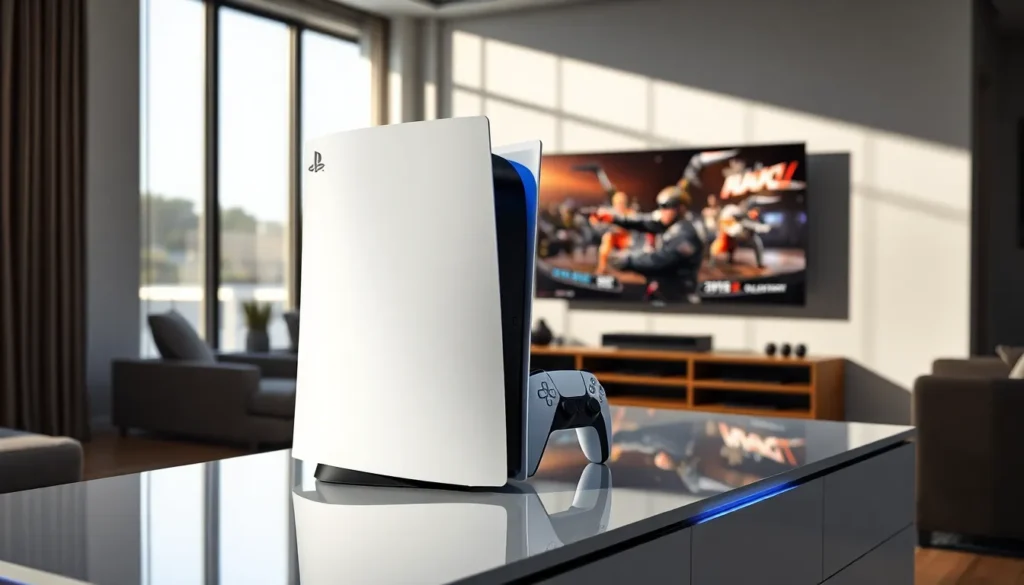

What is PlayStation? It’s Sony’s flagship gaming platform and one of the most recognized names in the video game industry. Since 1994, PlayStation has shaped how millions of people play games, connect with friends, and experience entertainment. The brand includes home consoles, handheld devices, online services, and exclusive game titles. This guide covers PlayStation’s history, console generations, key features, and how it stacks up against competitors. Whether someone is new to gaming or considering their next console purchase, understanding PlayStation provides valuable insight into modern gaming culture.
Table of Contents
ToggleKey Takeaways
- PlayStation is Sony’s flagship gaming platform that has shaped the video game industry since its 1994 launch in Japan.
- The PlayStation 2 remains the best-selling game console of all time with over 155 million units sold worldwide.
- PlayStation distinguishes itself through exclusive game franchises like God of War, Spider-Man, The Last of Us, and Horizon.
- PlayStation Plus subscription provides online multiplayer access, free monthly games, and cloud storage for game saves.
- The PlayStation 5 features an ultra-fast SSD, ray tracing graphics, and the innovative DualSense controller with haptic feedback.
- PlayStation competes with Xbox on hardware and services while offering a different experience than Nintendo Switch’s portable gaming focus.
The History of PlayStation
Sony launched the original PlayStation in Japan on December 3, 1994. The console arrived in North America in September 1995 and quickly became a cultural phenomenon. PlayStation emerged from a failed partnership with Nintendo to develop a CD-ROM add-on for the Super Nintendo. When that deal collapsed, Sony decided to create its own gaming console.
The timing proved perfect. CD-ROM technology allowed developers to create games with better graphics, full-motion video, and CD-quality audio. PlayStation capitalized on this advantage. Games like Final Fantasy VII, Metal Gear Solid, and Crash Bandicoot attracted millions of players worldwide.
Sony positioned PlayStation as a device for older audiences, not just children. This marketing strategy expanded the gaming demographic significantly. By 2005, the original PlayStation had sold over 102 million units globally.
The PlayStation brand grew into a cultural force during the late 1990s and early 2000s. Sony’s console introduced many people to gaming for the first time. It also established Sony as a major player in an industry previously dominated by Nintendo and Sega.
PlayStation Console Generations
Sony has released five main PlayStation console generations, each bringing significant improvements in technology and gaming experiences.
PlayStation (PS1) – 1994
The original PlayStation introduced 3D gaming to mainstream audiences. It sold over 102 million units and established Sony’s presence in the gaming market. The PS1 used CD-ROMs instead of cartridges, offering more storage for game content.
PlayStation 2 (PS2) – 2000
The PlayStation 2 remains the best-selling game console of all time with over 155 million units sold. It featured DVD playback, backward compatibility with PS1 games, and an enormous library of titles. The PS2 dominated the sixth console generation.
PlayStation 3 (PS3) – 2006
The PS3 introduced Blu-ray disc support and HD gaming. Its launch price of $599 drew criticism, but the console eventually found success. PlayStation Network became a core feature, enabling online multiplayer and digital game purchases.
PlayStation 4 (PS4) – 2013
Sony’s PS4 emphasized social features and streaming capabilities. It sold over 117 million units and offered a vast library of exclusive games. The PS4 Pro variant provided enhanced graphics for 4K televisions.
PlayStation 5 (PS5) – 2020
The current PlayStation generation features an ultra-fast SSD, ray tracing graphics, and the innovative DualSense controller with haptic feedback. PlayStation 5 continues Sony’s tradition of exclusive game franchises while supporting backward compatibility with PS4 titles.
Key Features and Services
PlayStation offers several features and services that define the gaming experience. These elements distinguish PlayStation from other platforms and provide value beyond just playing games.
Exclusive Game Titles
PlayStation is known for exclusive franchises like God of War, Spider-Man, The Last of Us, Horizon, and Uncharted. These games are developed by Sony’s first-party studios and cannot be played on competing consoles. Exclusive titles often receive critical acclaim and drive console sales.
DualSense Controller
The PlayStation 5’s DualSense controller introduced haptic feedback and adaptive triggers. These features let players feel in-game actions more realistically. Rain, explosions, and weapon recoil all create distinct sensations through the controller.
PlayStation Plus
This subscription service offers online multiplayer access, free monthly games, and exclusive discounts. PlayStation Plus has multiple tiers, with higher levels providing access to game streaming and a catalog of classic titles.
PlayStation Network and Online Gaming
PlayStation Network (PSN) serves as the backbone for all online PlayStation services. Users create a PSN account to access online multiplayer, the PlayStation Store, and social features. PSN connects over 100 million monthly active users worldwide.
The PlayStation Store offers digital game purchases, add-ons, and media content. Players can buy and download games directly to their console without needing physical discs. Regular sales provide discounts on popular titles.
Online multiplayer on PlayStation requires a PlayStation Plus subscription for most games. This subscription also includes cloud storage for game saves, allowing players to back up their progress and transfer data between consoles.
How PlayStation Compares to Other Consoles
PlayStation competes primarily with Microsoft’s Xbox and Nintendo’s Switch. Each platform has distinct strengths that appeal to different types of gamers.
PlayStation vs. Xbox
Both PlayStation and Xbox offer similar hardware capabilities and third-party game libraries. The main differences come down to exclusive games and services. PlayStation focuses on single-player narrative experiences through studios like Naughty Dog and Santa Monica Studio. Xbox emphasizes Game Pass, a subscription service offering access to hundreds of games including day-one releases.
PlayStation 5 and Xbox Series X deliver comparable performance. The PS5’s DualSense controller and exclusive game library give it an edge for some players. Xbox’s Game Pass subscription provides better value for gamers who play many different titles.
PlayStation vs. Nintendo Switch
The Nintendo Switch targets a different market with its portable design and family-friendly franchises. PlayStation offers more powerful hardware and mature game content. Switch owners play Nintendo exclusives like Mario, Zelda, and Pokémon. PlayStation owners access different exclusive franchises.
Many gamers own both a PlayStation console and a Nintendo Switch since the platforms serve different purposes. PlayStation handles graphically intensive games and online multiplayer. Switch provides portable gaming and local co-op experiences.
PlayStation maintains strong global market share, particularly in Europe and Japan. Its brand recognition and exclusive game lineup continue attracting new players each generation.